Every impression starts with intelligence.
Turn over a trillion buyer signals a day into the context behind every
account: who is in market, who is buying, and what to do next.
Use cases.
Related features.
See what success looks like.

Marketing, sales, and operations finally work from the same source of truth — the same signals, the same timing cues, and the same understanding of which accounts are actually ready.

The amount of work Email Agents do in a day would take someone on my team a week to do. It’s like having five more SDRs working simultaneously.


The intent data told us who to talk to. AI Email is what made actually talking to them possible, over months, without hiring anyone to do it.

Not having 6sense is like walking into a room with the lights off. How would you know where to look for the accounts that matter in the market? That’s what 6sense has brought to us.

Frequently asked questions.
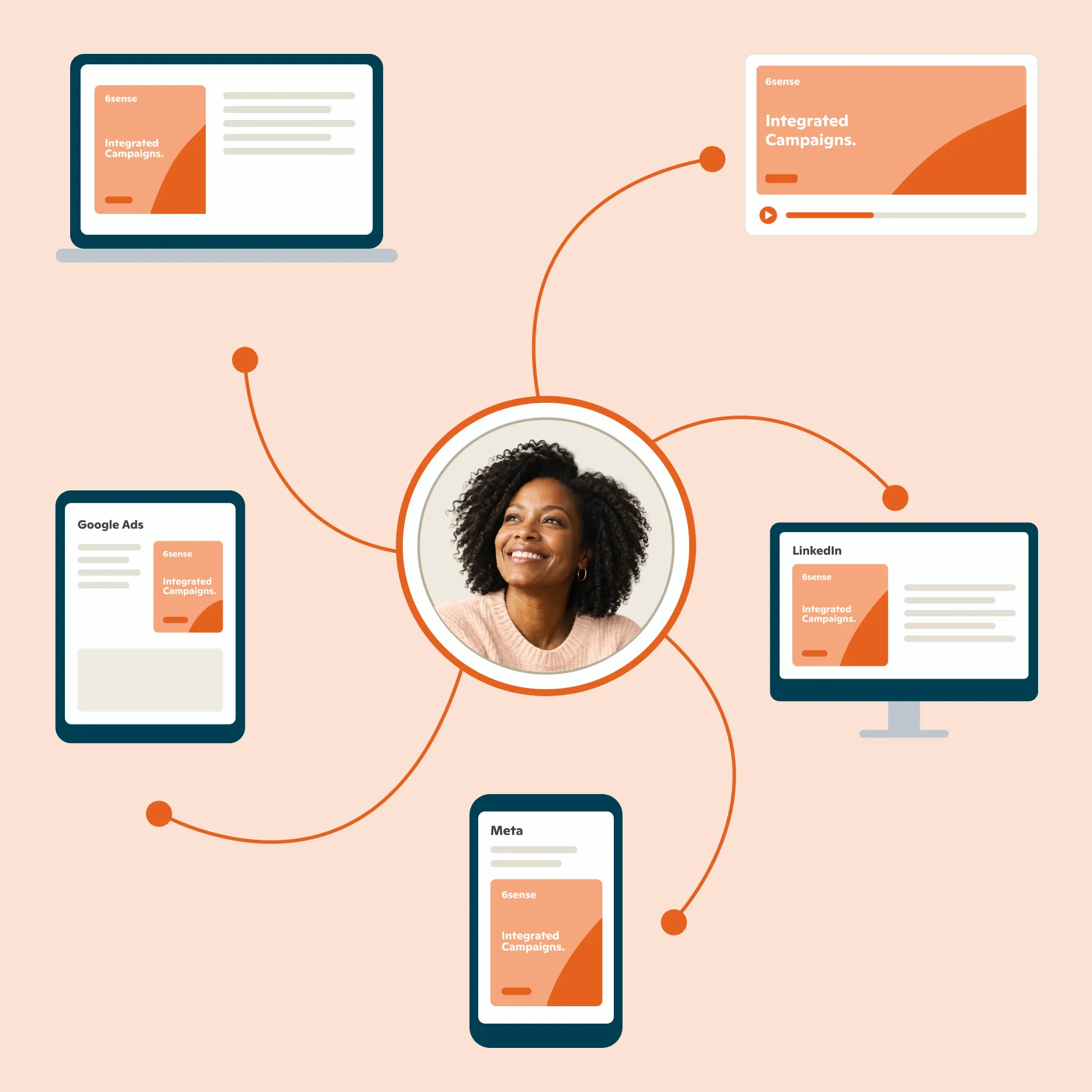
You keep those channels. The audience is built once from buying-stage intent and buying-group data, then synced to each one, so targeting stays consistent. The native DSP adds reach on inventory Google and LinkedIn don't cover.
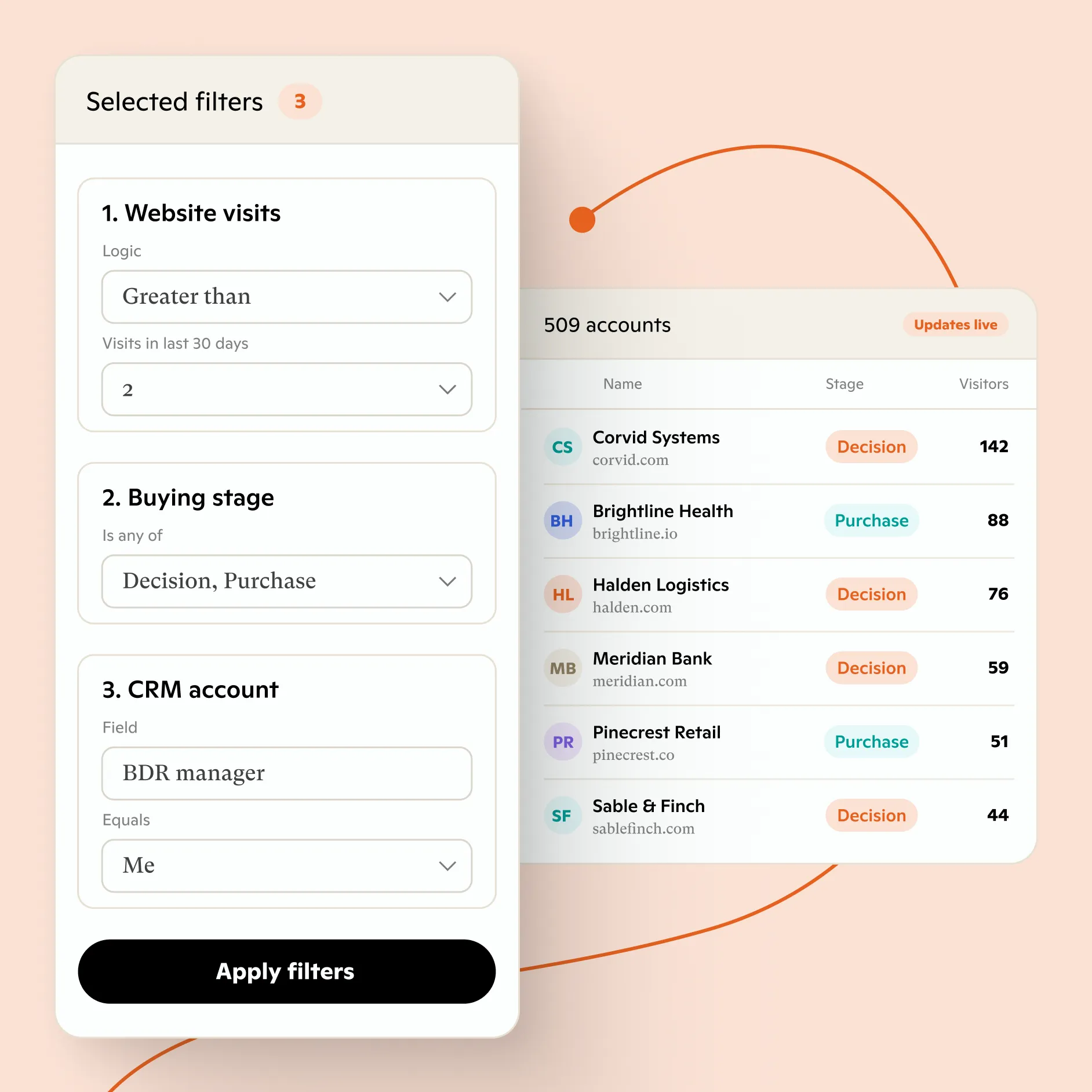
Job-title filters sit on top of account-wide bidding, so budget still reaches the whole org. Here, audiences are built from the buying group outward, so spend concentrates on the people who can move the deal.
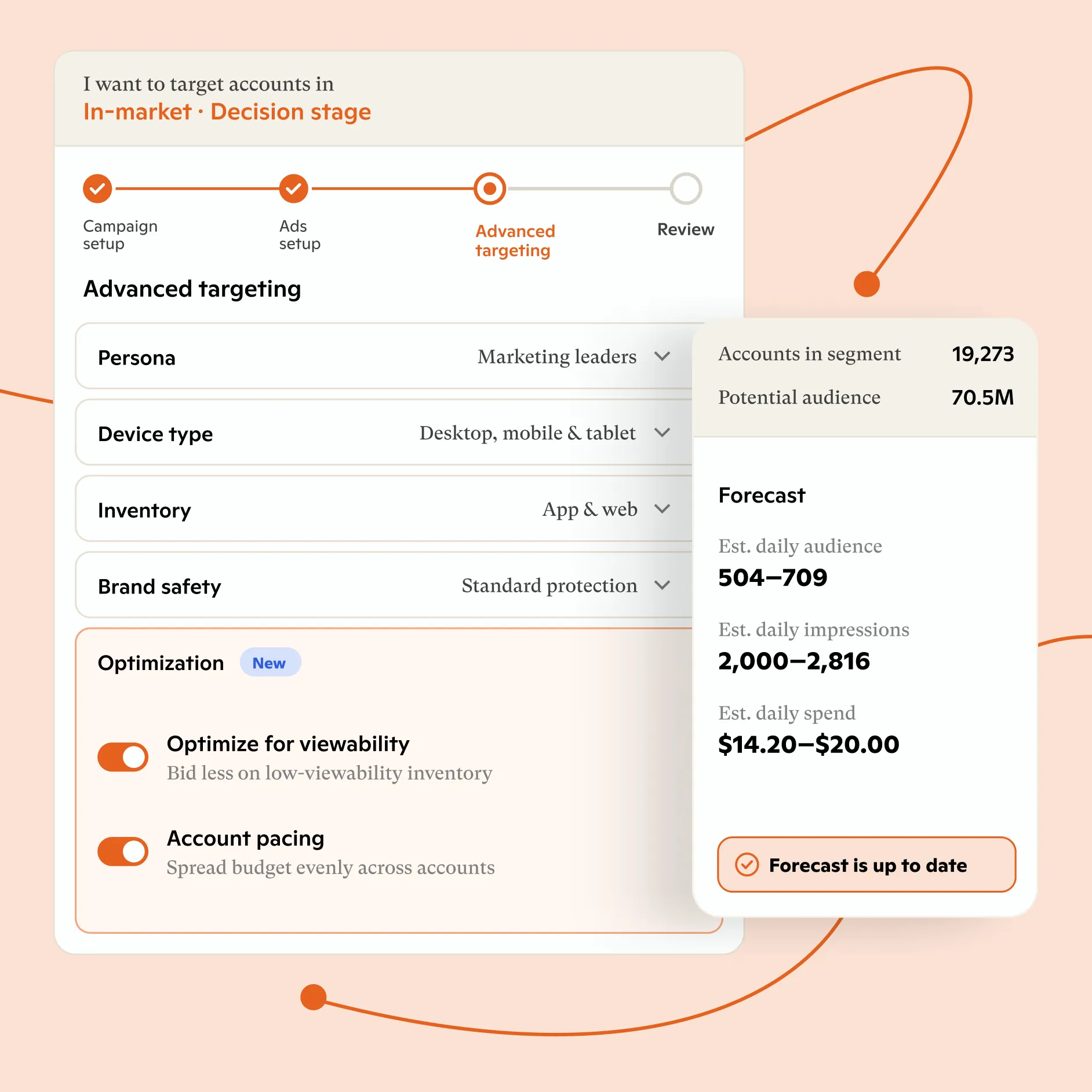
Targeting works at the company level, using IP-based account matching, first-party CRM and MAP data, and behavioral signals. Cookies are one signal among several, so it is less exposed to cookie changes than consumer-style programmatic. Inventory is priced at market based CPM, with fraud prevention and brand-safety controls on by default.
6sense runs critical functionality on at least two vendors simultaneously. When a partner changes its API, raises prices, or shuts down a product, 6sense reallocates to other established partners to prevent disruption to customer campaigns. The customer relationship stays with 6sense, not with any single upstream vendor.
Most B2B ad platforms still layer intent filters on top of consumer-built programmatic infrastructure, meaning your budget bids across the entire account or org, not the actual buying group. 6sense is built around buying-group-level targeting from the start: audiences are constructed from buying-stage intent data and matched to the specific contacts most likely to be part of the evaluation. That precision matters for CPMs too. Because 6sense targets a smaller, higher-quality audience rather than spraying broadly and filtering after the fact, you're competing for fewer, more relevant impressions, which means your budget goes further. Add transparent, market-based CPM pricing with no hidden platform margin, and the cost-efficiency advantage over broad-targeting B2B platforms compounds quickly.