10 best AI SDR software for B2B teams in 2026
AI SDR software is meant to help you find prospects, research accounts, write outreach, follow up, handle replies, and book meetings. The biggest difference is how each tool decides who to contact.
Some start with a database or list. Others respond to inbound activity, business events, or buying signals. The differences matter because the right targeting model depends on how you sell. If your goal is broad outbound coverage, volume may matter most. If you sell into larger accounts, timing and account context matter more.
When you compare AI SDR tools, focus on two questions:
- Where do the prospects come from?
- What makes the tool decide when to reach out?
We compared the top 10 AI SDR platforms based on those questions, plus their key features, limitations, pricing, and best fit.
AI SDR software at a glance
How AI SDR tools decide who to contact
An AI SDR can research a prospect and write a convincing email. But it still needs someone or something to decide which prospects deserve that attention.
That's why targeting deserves as much scrutiny as the message generation itself.
Most products now combine several types of data, so the lines between these models are getting blurrier. But four basic approaches still explain where outreach starts:
The top AI SDR software options compared
6sense AI Email Agents
Best for: Mid-market and enterprise B2B teams that want AI outreach timed to when an account shows active buying intent, reaching multiple people in the buying group and coordinated with ads and human BDRs on the same accounts.
Skip it if: You need a standalone agent for high-volume cold outreach to a broad prospect list, and you’re more focused on reach than precision.
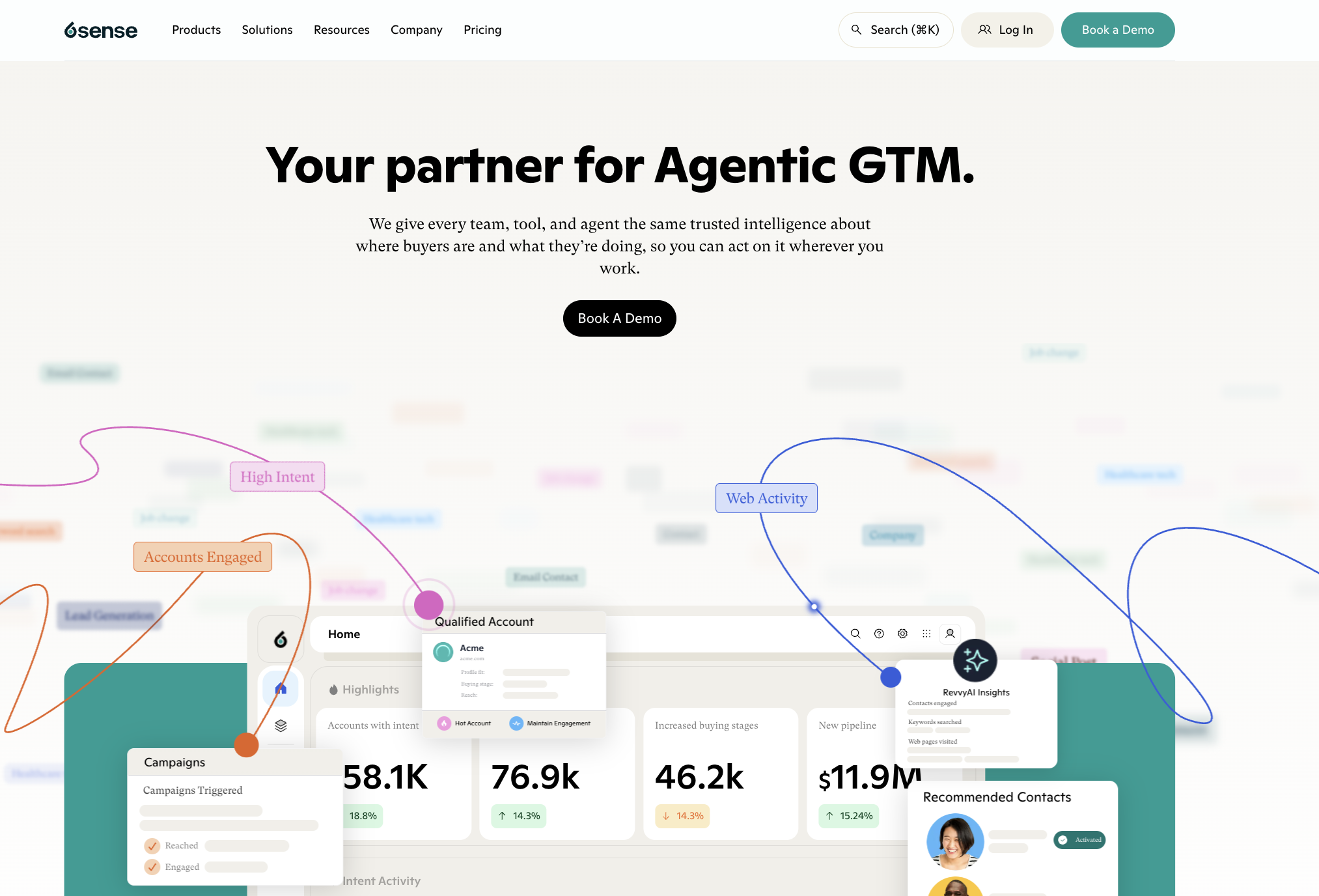
Many AI SDR tools are good at writing and sending personalized messages based on basic company data. 6sense is also focused on deciding who should get those emails, when, and why based on complex monthslong B2B buying journeys that involve 10+ decisionmakers.
AI Email Agents tap into 6sense Intelligence including real-time buyer signals, along with CRM activity, account history, people data, and Predictive Intelligence. That gives the agent context on which accounts are showing buying activity, what they’re researching, where they are in the buying journey, and who in the buying group matters. As an account’s behavior changes, the audience and outreach can change with it instead of working through the same static list.
Teams use 6sense AI Email Agents for:
- High-intent prospecting: Reach prospects at active accounts based on what those accounts are researching.
- Prospect multi-threading: Engage multiple people across the buying group instead of relying on a single lead.
- Inbound qualification: Respond to and qualify new leads before routing the right conversations to sales.
- Event and intent-based outreach: Follow up with attendees or trigger personalized campaigns around the topics buyers are researching.
6sense can spot when an account starts showing stronger buying signals and flag it for sales. It can then find the right people to contact, start outreach based on what the account has been researching, and hand the conversation to a BDR when someone replies.
6sense was also named a Leader in The Forrester Wave: Conversation Automation Solutions for B2B, Q4 2025.
How it decides who to contact
6sense brings buyer signals together, adds context, and uses predictive models to help determine which accounts and people are worth prioritizing.
- Account-level signals: 6sense combines activity from your CRM, website, keyword research, third-party intent, company data, contact data, and other sources rather than relying on a static prospect list.
- Keyword-level intent: See what topics accounts are actively researching and why they may be showing interest.
- Predictive Intelligence: More than a decade of predictive models turns those signals into context around profile fit, buying stage, engagement, reach, and account priority.
- Buying-group intelligence: Identify the people involved in the decision so outreach can extend beyond the first known contact.
Instead of treating every signal as a standalone trigger, 6sense interprets the surrounding context to help prioritize who to engage and when.
Key AI SDR features
- Intent-triggered outreach. Buying signals can trigger contact acquisition and outreach automatically, so the agent's effort goes to accounts already in-market.
- Prompt-to-pipeline sequences. One prompt builds a complete multi-email sequence for inbound, outbound, or event follow-up. These can be reviewed and modified, but teams can launch campaigns without writing each email by hand.
- Personalization from live buying data. Agents use intent, company and people data, your brand voice, product knowledge, and CRM history to generate sequences. Messages reference what the account is actually researching.
- Autonomous replies with human handoff. AI classifies replies, continues the conversation, sends natural follow-ups, and makes the intro when it's time for a human handoff. Reps step in once a prospect is ready to talk.
- Built-in deliverability controls. Custom AI email agent inboxes, contact validation rules, and bounce monitoring are included, with sending from 6sense, Gmail, or Outlook.
Limitations
- Best for more complex B2B sales motions. Teams with multiple buyers, longer sales cycles, and account-based strategies will get the most from 6sense’s intent, buying-stage, and buying-group data.
- Built for targeted outreach over pure volume. 6sense is strongest when you want to prioritize accounts showing buying activity, rather than simply maximize the number of cold contacts reached.
- Requires some setup. Teams may need time to configure segments, keywords, workflows, and reporting around their sales process.
What customers are saying
- Simpro: 126% increase in average deal size and a 42% reply rate
- Vendavo: 3x return using AI Email vs BDRs and $3.3M in generated pipeline from AI Email
- Reltio: Saved 1,098 hours of BDR time, with a 50% reduction in closed-lost opportunities
Pricing
- Custom pricing based on platform scope. AI Email Agents are part of Revenue Marketing.
- Teams can adopt the full platform or bring 6sense intelligence into their existing stack through APIs and the MCP server.
See how 6sense AI Email Agents turn buying signals into outreach that reaches the right people in the buying group at the right time. Request a demo.
11x
Best for: Teams where the phone drives conversion and they want an AI agent that places and answers calls, alongside email.
Skip it if: You don't use phone as a sales channel, or you need transparent pricing and a fast rollout.
11x has two digital SDR agents: Alice handles outbound prospecting, while Julian handles inbound qualification.
Alice can identify prospects, research them, create personalized outreach, run sequences, handle responses, and book meetings. Julian responds to inbound leads through channels including phone, website chat, SMS, and WhatsApp, then qualifies them, and routes them to the appropriate seller.
How it decides who to contact
- Alice builds prospect lists from a contact database based on your ICP, or works from lists you provide.
- Julian handles inbound calls and outbound call follow-up on leads already in your system.
- Outreach timing is driven by the list, not by buying activity.
Key AI SDR features
- Autonomous outbound agent (Alice). Researches prospects, writes, sends, and follows up across email and LinkedIn with minimal human input.
- AI phone agent (Julian). Answers inbound calls, calls leads back, qualifies them, and books meetings. Useful for teams losing leads to slow call follow-up.
- Broad channel coverage. Outreach can span email, LinkedIn, phone, SMS, and WhatsApp.
- Multi-language outreach. Alice supports outreach in more than 105 languages.
Limitations
- Output quality depends directly on your inputs. 11x agents are designed to work with considerable autonomy, which makes the quality of your ICP definition and knowledge base important.
- Recent G2 reviewers have reported slower-than-expected message generation and “robotic” outreach that sometimes needs refinement.
Pricing
- Alice starts at $3,750 per month, billed annually, for up to 2,000 new prospects per month. Pro and Enterprise pricing is custom.
- Julian is priced separately. Its Growth tier currently starts at $5,333 per month for voice or $2,417 per month for chat, billed annually.
Artisan
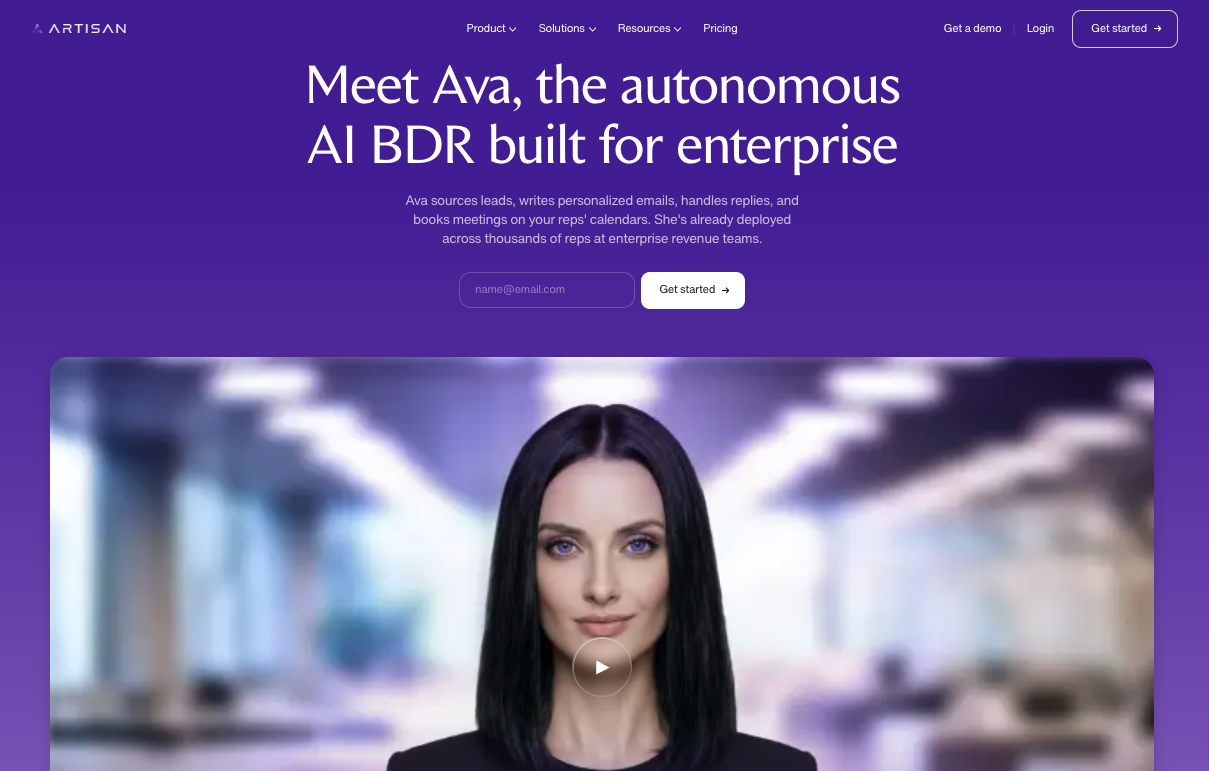
Artisan's AI BDR, Ava, is designed to run outbound from prospecting through meeting booking. Artisan’s platform combines contact data, enrichment, intent signals, email infrastructure, campaign execution, reply handling, and dialing.
Best for: Companies with no SDR, no data provider, and no sending infrastructure that want one agent with contact data and sending built in.
Skip it if: You already have a data provider and sales engagement tool, since you'd be paying for capabilities you already own.
How it decides who to contact
- Ava can find prospects in Artisan’s built-in B2B database or work from contacts in your CRM.
- It then uses intent signals such as funding rounds, leadership changes, hiring activity, and website visits to prioritize prospects and trigger outreach.
Key AI SDR features
- Built-in contact database with enrichment. Reduces the need to buy a separate data provider.
- Deliverability management. Email warm-up and sending infrastructure are included, which matters for teams without a RevOps function to set this up.
- Fast onboarding. Designed to be running within days, without a lengthy implementation.
Limitations
- Can be redundant if you already have a strong outbound stack. Artisan bundles data, enrichment, sequencing, deliverability, and calling, so it makes the most sense if you want to consolidate tools.
- Requires careful setup. Some G2 reviewers mention targeting mistakes and AI-generated messaging that can miss on tone or accuracy.
Pricing
- Artisan does not publish fixed dollar pricing for its Team, Scale, and Enterprise plans. Pricing is scoped to volume and deployment. Its Team example is designed around roughly 2,500 leads contacted per month, while Scale is around 6,000.
AiSDR
Best for: HubSpot teams that want to pilot an AI SDR for a quarter before committing to an annual contract.
Skip it if: You run on Salesforce, or you need an enterprise-grade deployment with advanced governance.
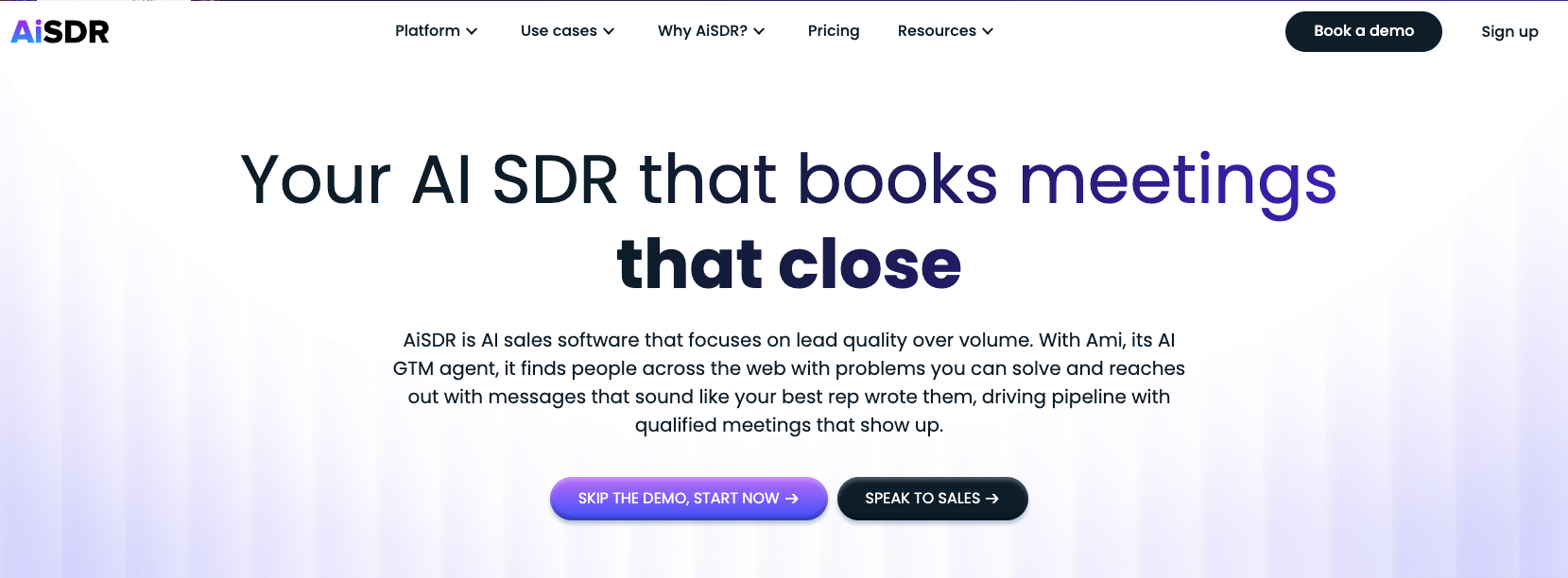
AiSDR’s biggest differentiator is accessibility. You can begin with self-serve, pay-as-you-go outreach, and the native HubSpot integration makes it straightforward to fit into your existing workflow. It also handles prospecting, research, email and LinkedIn outreach, replies, and deliverability in one platform.
How it decides who to contact
- Uses AiSDR's lead database (via search credits) and lists you import from HubSpot.
- It can also prioritize outreach using signals such as funding, hiring, job changes, LinkedIn activity, and website visits.
Key AI SDR features
- Native HubSpot integration. Syncs contacts, activity, and meetings with HubSpot, so the agent works inside the CRM your team already uses.
- Automated reply handling. Responds to questions and objections and books meetings on reps' calendars.
- Published, quarterly pricing. Lets teams budget and test without a long procurement cycle.
Limitations
- G2 reviewers say AiSDR can require more setup and oversight than the “autonomous SDR” label suggests, especially when launching new campaigns.
- Users also mention occasional off-target messaging that needs manual adjustment.
- AiSDR works best in English, while multilingual campaigns may require more hands-on review.
Pricing
- AiSDR offers pay-as-you-go pricing at $1.50 per person contacted, including research, lead data, and message creation. For teams contacting 1,000+ people a month, pricing is volume-based.
Salesforce Agentforce SDR (including Qualified Piper)
Best for: Organizations standardized on Salesforce that want the AI SDR to live inside the CRM, with Piper converting website visitors into meetings.
Skip it if: You don't use Salesforce, or your main need is net-new outbound to accounts that haven't found you yet.
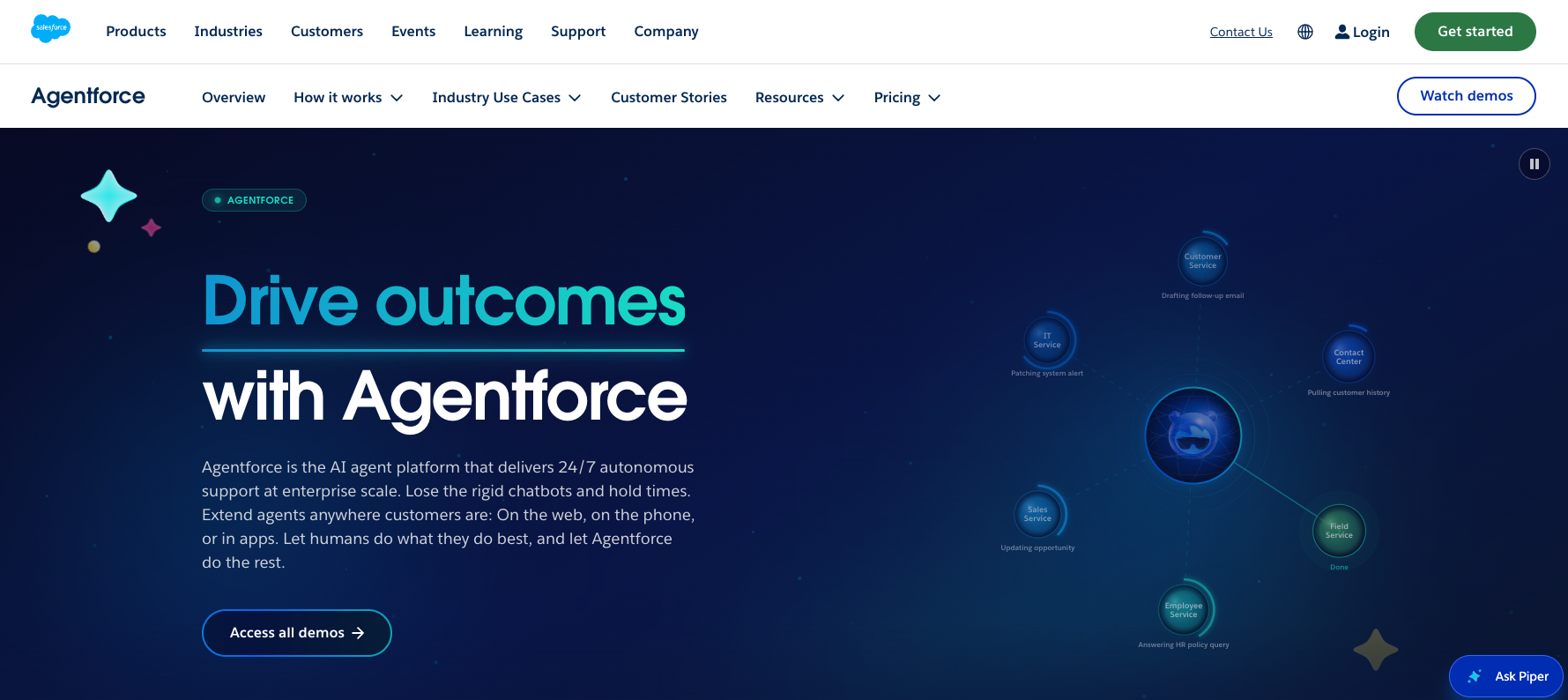
Salesforce doesn’t sell a standalone AI SDR. Instead, its Agentforce platform includes different agents for different parts of the sales process.
Agentforce SDR works leads and contacts already in Salesforce, handling outreach, replies, qualification, and handoff to sales. Piper, which came to Salesforce through its 2026 acquisition of Qualified, is focused on inbound demand. It engages website visitors through chat, voice, and video, then helps nurture and qualify them and book meetings.
For net-new outbound, another autonomous agent, Hunter, uses buyer intent to identify prospects and run outreach and nurture.
How it decides who to contact
- Agentforce SDR works leads already in Salesforce, such as form fills and inbound inquiries.
- Piper engages visitors on your website in real time.
- Neither is designed to find new accounts that haven't engaged with you.
Key AI SDR Features
- CRM-native lead follow-up. Agentforce SDR responds to and nurtures inbound leads directly from Salesforce data, so there's no separate tool to sync.
- Website visitor conversion (Piper). Engages visitors through chat, voice, and video and books meetings on the right rep's calendar while the visitor is still on your site.
- Salesforce governance and data. Inherits Salesforce permissions and security, which simplifies approval for enterprise IT teams.
Limitations
- Agentforce makes the most sense if you’re already invested in Salesforce. Without that ecosystem, you lose much of the advantage of having agents work natively with your CRM data and workflows.
- The other trade-off is setup. G2 reviewers say Agentforce can take time and expertise to configure, and some AI-driven workflows still need monitoring.
- Piper is generally well reviewed, but users also mention a learning curve, less intuitive reporting, and added complexity as campaigns and customizations grow.
Pricing
- Agentforce offers consumption-based pricing through Flex Credits or Conversations, as well as per-user licensing.
Amplemarket (Duo)
Best for: SDR teams who want AI to draft and queue outreach that a human approves before it sends.
Skip it if: You want a fully autonomous agent that runs outbound without rep involvement.
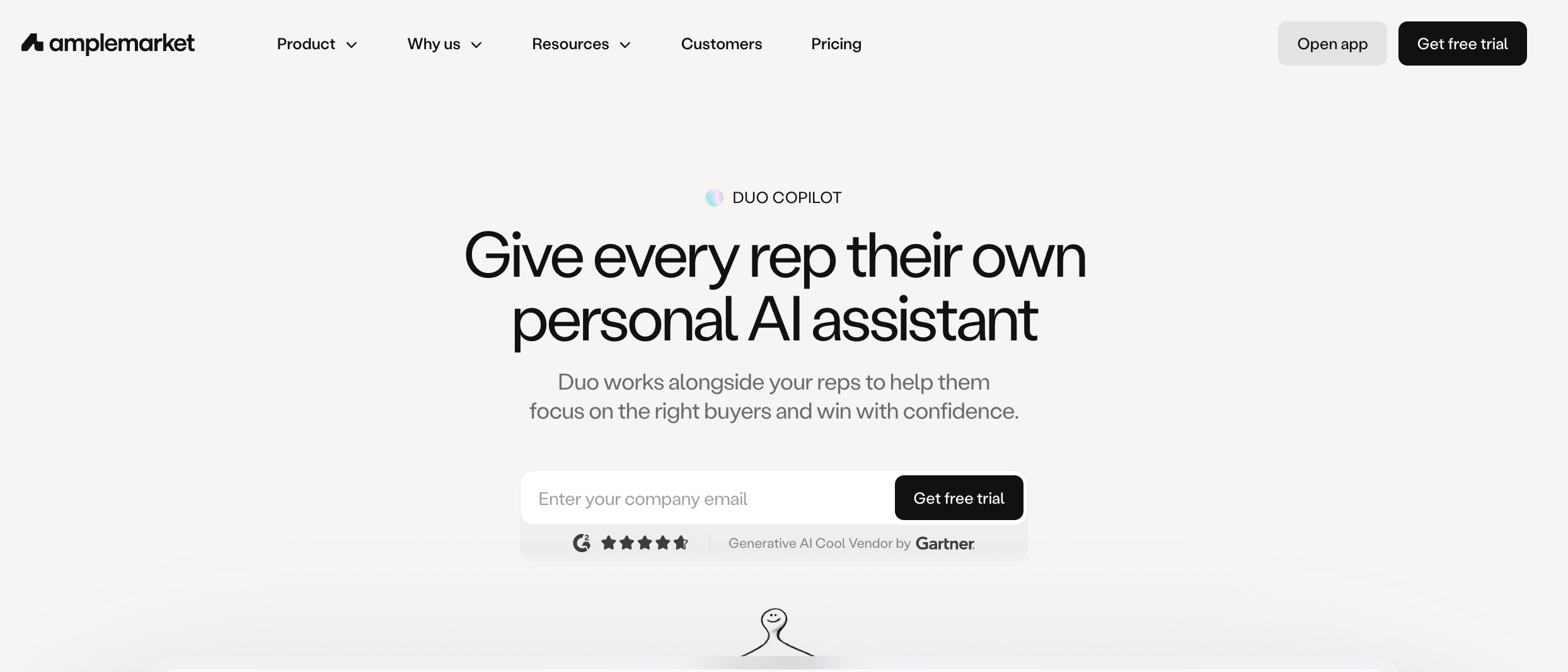
Duo Copilot is Amplemarket’s AI assistant. Duo is deliberately more human-in-the-loop than products like 11x or Artisan. It’s less of an SDR replacement and more of a prospecting copilot.
Duo continuously looks for relevant prospects, researches why they may be worth contacting, and prepares personalized outreach. A seller can then send, edit, regenerate, or dismiss the recommendation.
How it decides who to contact
- Monitors third-party triggers like job changes, hiring activity, and social engagement to surface prospects.
- Reps review and approve the suggested outreach.
Key AI SDR features
- Signal monitoring. Flags prospects when trigger events happen, giving reps a reason to reach out.
- AI-drafted multichannel sequences. Writes outreach across email, LinkedIn, and phone for reps to review.
- Human approval workflow. Reps approve or edit each message, which keeps quality and brand voice in human hands.
Limitations
- Duo gives more control, but it doesn’t eliminate as much manual work as a fully autonomous AI SDR.
- Reviewers mention a learning curve, some friction with sequences and integrations, and the need to review signal recommendations before acting on them. That’s especially important because signals like funding, hiring, or job changes can point to an opportunity, but they don’t always mean an account is ready to buy.
Pricing
- Amplemarket’s Startup plan starts at $600 per month, billed annually, and includes two users. The Growth plan is designed for larger teams, includes four users, and uses custom pricing. Elite is the highest-tier plan, includes ten users, and is also custom priced. All plans include a free trial.
Regie.ai
Best for: Larger sales teams that want AI to cover more of the long tail while reps stay focused on strategic accounts and live conversations.
Skip it if: You’re a small team with limited account volume, or you want a fully autonomous AI SDR that requires less rep oversight.
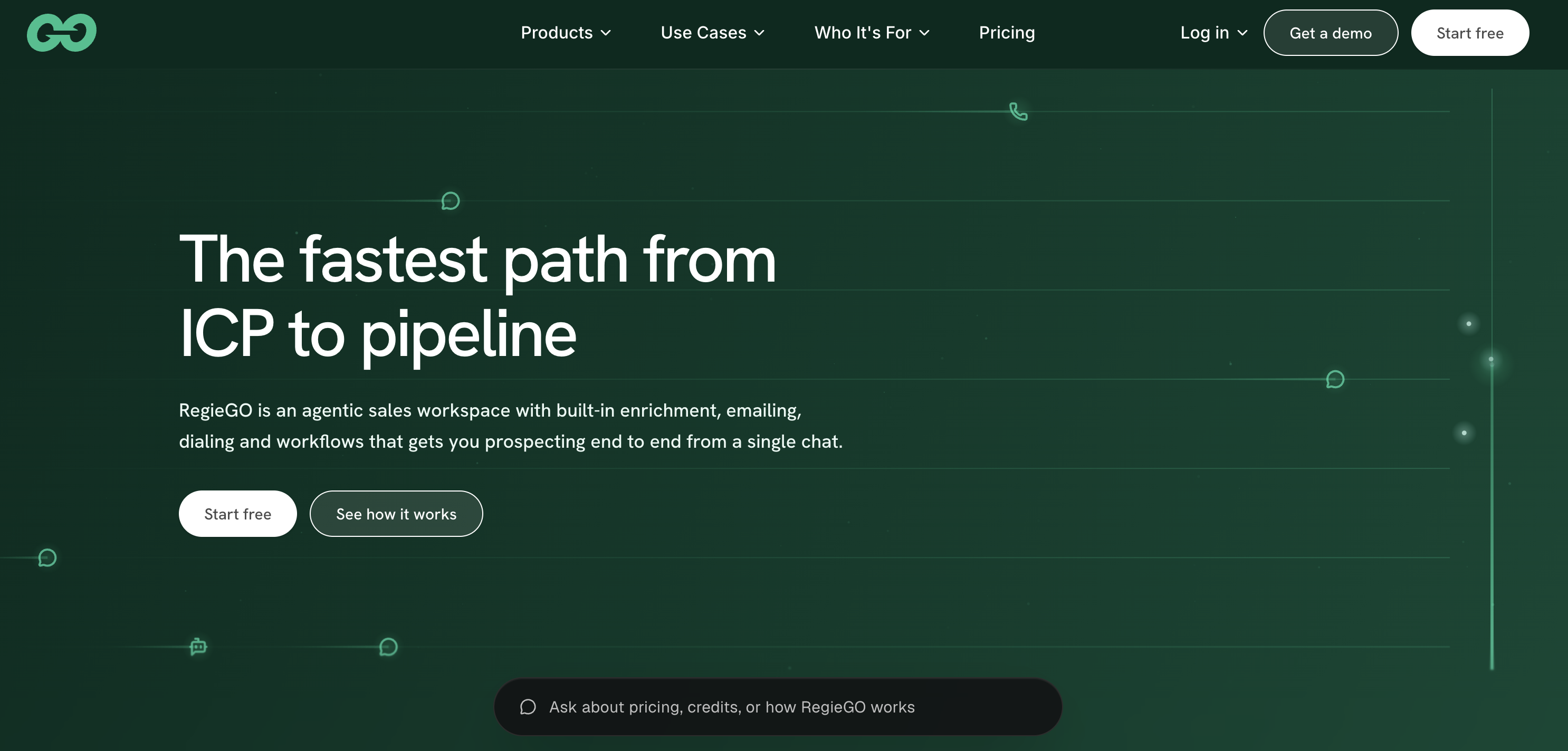
RegieGO is Regie.ai’s sales workspace for outbound prospecting. It adds AI prospecting, research, enrichment, email, calling, and automation on top of your existing CRM and sales stack, so teams can manage more of the workflow in one place.
Regie is more hybrid than autonomous; AI handles much of the repetitive prospecting work, while sellers step in for live conversations and higher-value opportunities.
How it decides who to contact
- Regie uses what it calls “why now” signals to decide which accounts are worth contacting. It monitors changes such as funding, hiring, website activity, and executive moves, then uses those signals to prioritize accounts and trigger relevant prospecting plays.
Key AI SDR features
- Humans own the conversation. Regie can handle much of the prospecting and draft follow-ups or replies, but reps stay responsible for buyer conversations and review AI-generated content before it goes out.
- Built-in parallel dialer. Reps can dial multiple numbers at once.
- Integrations with existing sales engagement tools. Regie integrates with tools like Outreach and Salesloft, so teams can add AI prospecting without rebuilding their workflow.
Limitations
- G2 reviewers mention inaccurate prospect data and AI-generated messaging that needs editing before it goes out.
- Some users report a learning curve during setup and workflow friction around targeting, reporting, and integrations.
- Teams should expect to check both the data and the messaging rather than treat Regie as completely hands-off.
Pricing
- Regie has a free plan with 250 one-time credits. Pro is $49 per month, or $41 per month with annual billing. Team pricing is $150 per seat per month, or $125 with annual billing, with a two-seat minimum. Enterprise pricing is custom.
Apollo.io
Best for: Founders or a first SDR hire building an outbound motion from scratch on a tight budget.
Skip it if: You're an enterprise team that needs strict data governance, or you want an agent that runs outbound without a human operating it.
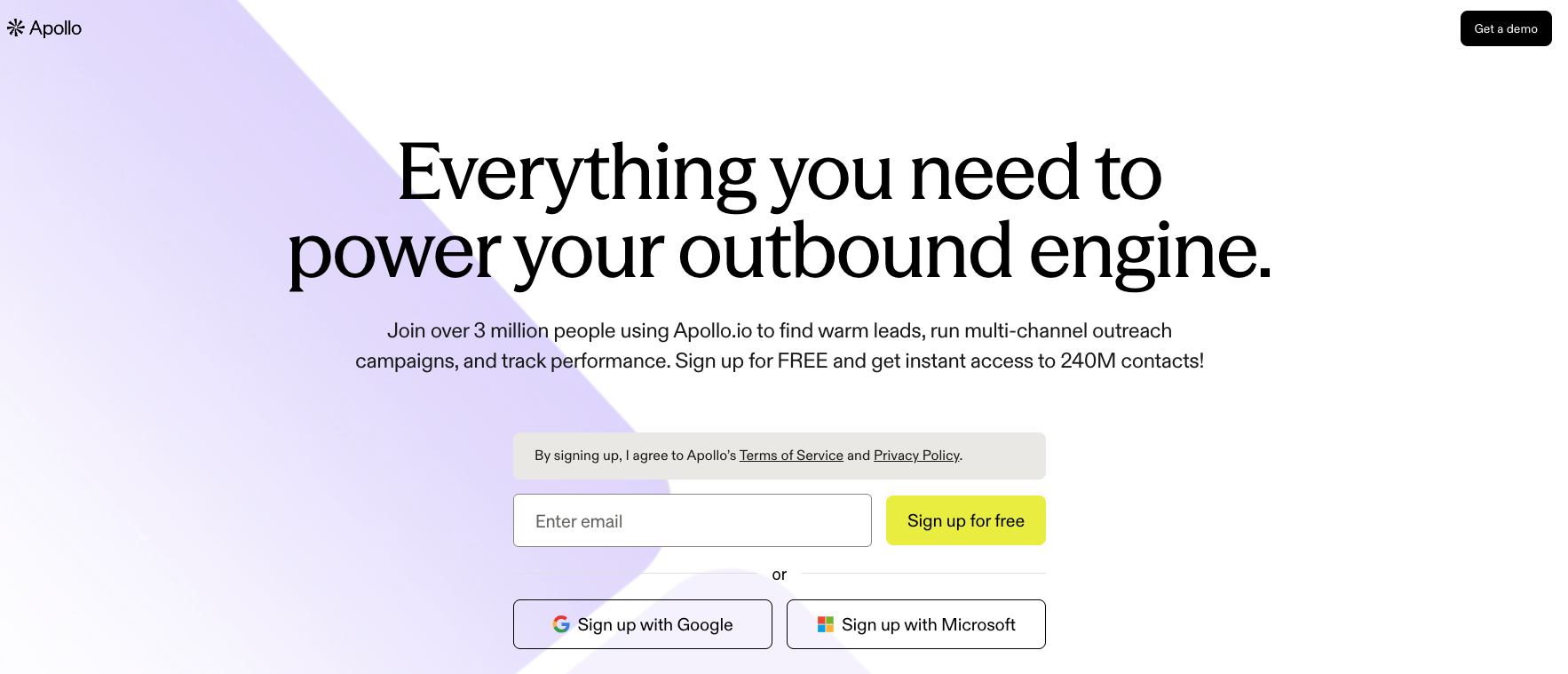
Apollo is best understood as a broad sales platform with increasingly capable AI, rather than a pure AI SDR. Its database, enrichment, sequencing, calling, workflows, and buying-intent features already cover much of the outbound process. AI agents now add lead discovery, sequence creation, and campaign optimization on top.
Apollo is useful for teams that want to consolidate their data, sales engagement, and AI tools rather than buy each separately.
How it decides who to contact
- Users build lists from Apollo's contact database using filters like title, industry, and company size.
- Apollo's buying intent is at the account-level, not person-level. If a company is researching a topic, that doesn't necessarily mean the particular contact you found was the person doing the research.
Key AI SDR features
- Large contact database (240M+ global contacts and 30M+ companies). Gives new outbound teams data and outreach in one tool.
- AI-written sequences. Drafts emails and steps for multichannel sequences.
- Free plan. Teams can start without a contract and upgrade as outbound grows.
Limitations
- Apollo needs more human oversight than a fully autonomous AI SDR. Sellers typically review who gets added to campaigns and stay involved in outreach decisions.
- G2 reviewers mention outdated or inaccurate contact details, especially phone numbers, so it’s worth validating records before launching high-volume campaigns.
- Heavy users also say Apollo’s credit system can become restrictive, particularly when prospecting at scale.
Pricing
- Apollo offers a free plan. Paid plans start at $49 per user/month for Basic, $79 for Professional, and $119 for Organization (3+ users) when billed annually.
- Each plan also comes with a credit allowance. Credits are used for certain actions, such as revealing contact data, enrichment, and AI research, so higher-volume teams may need to budget for additional usage.
Reply.io (Jason AI)
Best for: Agencies running outbound for multiple clients from separate workspaces.
Skip it if: You're an in-house team selling one product and don't need multi-client management.
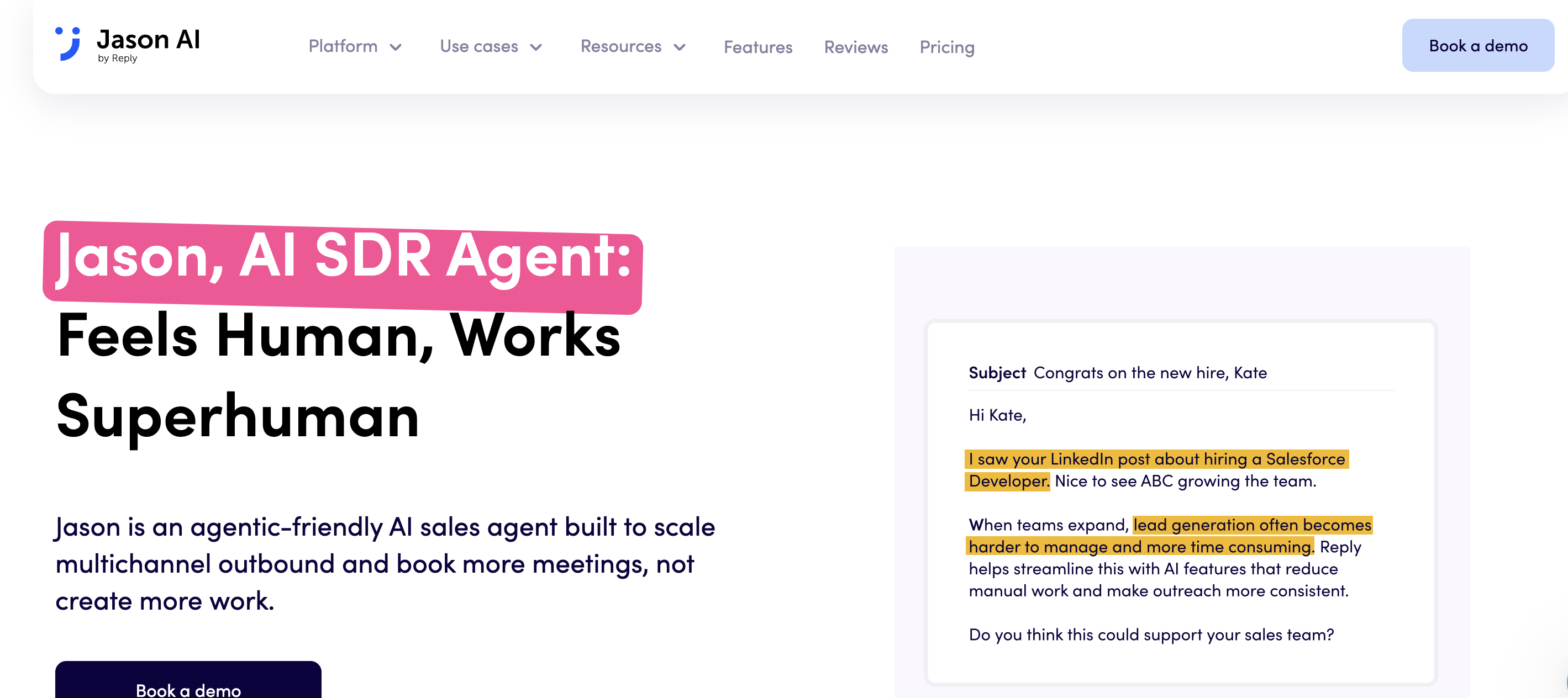
Jason AI is Reply.io's AI SDR. Jason can handle much of the outbound workflow itself.
Give it context on your company, ICP, and offer, and Jason can source prospects, build sequences, personalize outreach, manage replies, re-engage prospects, and book meetings.
Teams can choose whether messages require approval or are sent automatically.
Jason’s advantage is flexibility for agencies: separate client workspaces make it easier to manage multiple accounts, while Reply.io supports one of the broadest channel mixes on this list.
How it decides who to contact
- Works from Reply.io's B2B database or lists you import.
Key AI SDR features
- Agency workspaces. Keeps each client's campaigns, data, and reporting separate.
- Wide channel coverage. Sequences across email, LinkedIn, calls, SMS, and WhatsApp.
- Autonomous reply handling and booking. Jason AI answers replies and books meetings.
- Built-in contact data. Lets agencies source leads without a separate provider.
Limitations
- Setup takes some work. Reviewers note that getting Jason configured and campaigns running can take time.
- Strong inputs matter. You need a clear ICP, offer, and playbook for the automation to stay relevant.
- Higher starting cost. Jason is a bigger investment than some lighter-weight AI SDR tools.
Pricing
- Pricing starts at roughly $500 per month on its annual AI SDR Starter plan. Higher-volume plans are available for larger deployments.
Conversica
Best for: Large lead databases that need persistent, months-long two-way follow-up, including in multiple languages.
Skip it if: You need net-new prospecting, since Conversica works leads you already have.
Conversica has been around longer than most AI SDR tools. It's built primarily for persistent follow-up with leads marketing generated but sales never worked. Its AI assistants can keep engaging those contacts, respond to replies, qualify interest, and alert reps when someone is ready for human follow-up.
Conversica also supports multiple languages, including English, Spanish, Portuguese, German, French, Japanese, Italian, and limited Simplified Chinese, with availability varying by conversation.
How it decides who to contact
- Works existing leads in your CRM or marketing automation platform, such as form fills, event attendees, and aging leads.
Key AI SDR features
- Persistent follow-up. Keeps conversations going over weeks or months until a lead responds or opts out.
- Two-way conversations across channels. Engages over email, SMS, and chat.
- Multi-language support. Lets global teams follow up in each lead's language.
Limitations
- Conversica is built to help you get more from the leads you already have. That makes it a better fit for teams that already generate plenty of leads but struggle to work them consistently.
- Users also mention limited flexibility when customizing messaging templates.
- If you need an AI agent to find brand-new accounts and start outbound from scratch, other tools on this list are better suited to that job.
Pricing
- Conversica uses custom pricing and does not publish pricing information on its website.
Choosing an AI SDR for Your Company
The easiest way to narrow your list isn't to count features. Start with the sales problem you actually want the AI to solve.
1. Decide what should trigger outreach
What should make the AI decide someone is worth contacting?
For high-volume outbound, matching your ICP may be enough. For larger deals, you may want stronger evidence, such as a website visit, a funding event, relevant research activity, or an account moving into a later buying stage.
The higher the value of the account, the more costly bad timing becomes. More volume can mean more wasted touches and conversations with prospects who were never ready to buy.
2. Decide how much control to give the AI
AI SDRs range from copilots to almost fully autonomous agents.
Some find prospects and draft outreach, then wait for a rep to approve. Others source contacts, send messages, handle replies, and book meetings without any human involvement at all.
Choose the level of autonomy based on your sales motions and the consequences of the AI getting something wrong. You may be comfortable letting AI run thousands of SMB accounts on its own, while requiring human review for more strategic enterprise accounts, for example.
3. Decide whether you want to add a tool or replace part of your stack
Some AI SDRs are standalone agents. Others bundle prospect data, enrichment, email infrastructure, dialing, and sales engagement into one platform. Others work inside systems such as Salesforce or 6sense.
Look at what you already pay for before buying another platform. An all-in-one tool can simplify a small sales stack, but it may create unnecessary overlap for a team that already has strong CRM, data, and engagement systems.
Also consider whether the AI will use the same account and buyer data as the rest of your revenue team, or if it will create a conflicting source of truth.
4. Choose the channels your buyers actually use
More channels don’t necessarily make a tool better. If calling drives most of your meetings, a strong dialer matters more than SMS or WhatsApp.
If most opportunities start on your website, inbound qualification may be more valuable than outbound automation.
And if you sell into complex enterprise accounts, coordinating email with seller outreach, advertising, and buying-group activity may matter more than simply adding another channel.
If you’re still narrowing the options, this table shows which type of AI SDR may fit your scenario:
Why teams choose 6sense for AI SDR outreach
Any AI SDR can react to basic buyer signals and send outreach. 6sense adds and interprets the context around those signals. Signalverse processes more than 1 trillion buyer signals every day, bringing together activity across your CRM, website, keyword research, third-party intent, company data, contact data, and other sources.
Predictive Intelligence then interprets that activity to show which accounts are most likely to buy, where they are in the journey, and who is involved.
That fuller picture helps 6sense prioritize and time outreach based on what’s happening across the buying process, not a single trigger in isolation. The same intelligence can guide AI Email Agents, sellers, advertising, Intelligent Workflows, and other AI tools, so all your teams are always working from the same buyer context.
See how 6sense AI Email Agents reach in-market buying groups at the right moment. Request a demo.