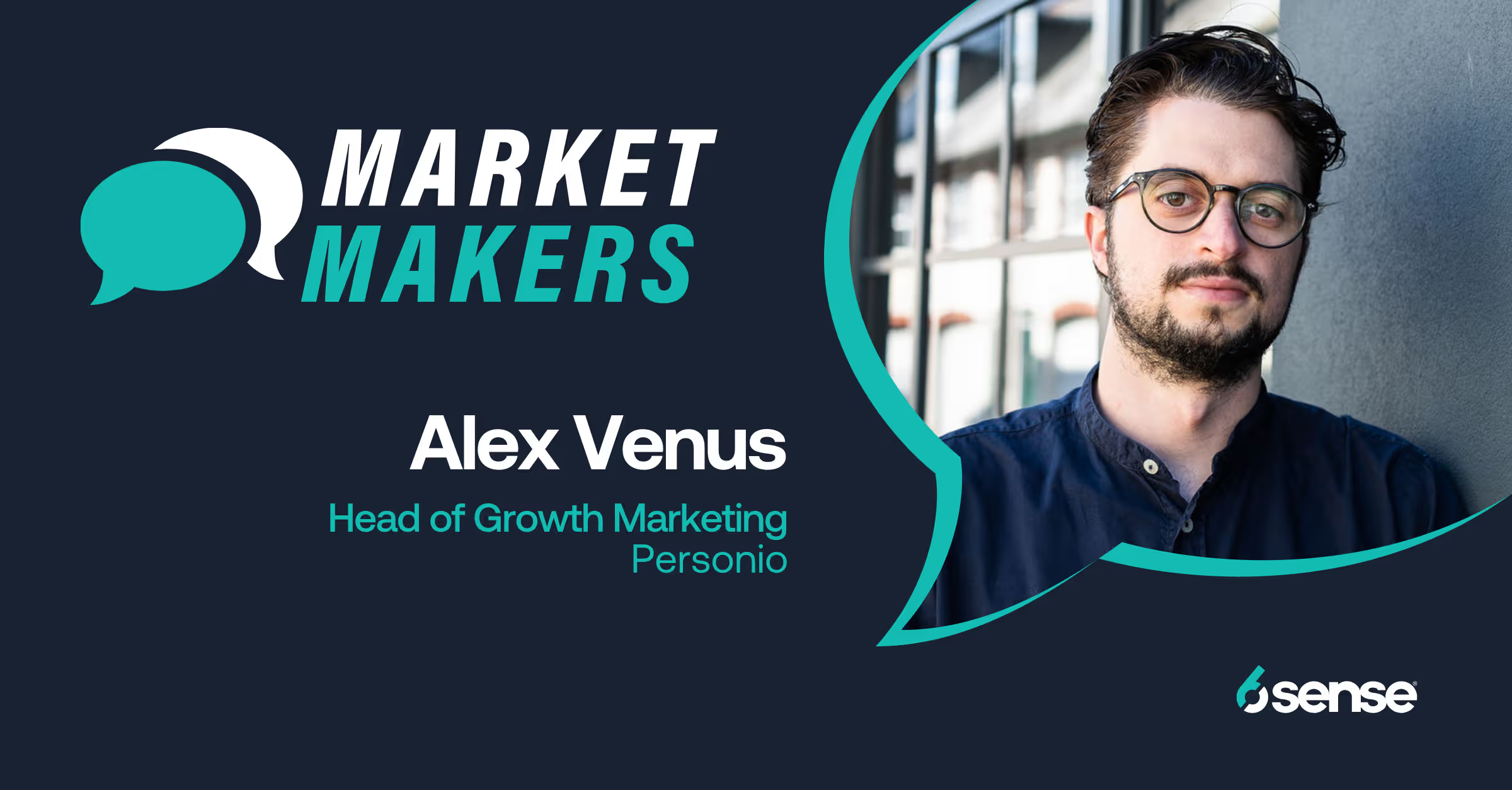
Alex Venus is Head of Growth Marketing at Personio, where he leads the company’s digital marketing strategy, content strategy, and campaigns from awareness through to accepted pipeline. With responsibility for teams spanning performance marketing, creative analytics, optimisation, and bid strategies, Alex has been instrumental in driving Personio’s AI-first approach to go-to-market operations. Over four and a half years at the company, he has helped transform marketing processes through strategic AI adoption, earning recognition as a leader in leveraging technology to accelerate execution and improve customer experience.
Personio
Personio is a leading HR software company providing an all-in-one human resources platform for small and medium-sized businesses across Europe. The company offers comprehensive solutions spanning recruitment, onboarding, payroll, absence management, and employee development. As a prominent player in the European SaaS market, Personio is pioneering AI-enabled technology to help organisations streamline HR processes and manage their workforce more effectively.
“This interview is part of the New Skills, New Mindset Market View Report, produced by TechPros and sponsored by 6sense.”
How is your organisation approaching AI adoption, and what governance structures have you put in place?
At Personio, we’ve made considerable progress with AI adoption across the business. Most teams now incorporate AI into their daily workflows, and we’ve fundamentally transformed our approach to administration, systems, and data analysis as a result. Our senior leadership team has been instrumental in driving this shift, championing AI integration not only in internal operations but also in how we optimise the customer experience.
To balance governance with speed of adoption, we use a centralised platform called Langdock. This provides access to multiple large language models within a secure environment, allowing teams to select the most appropriate model for each use case. For analytical work and content development, we typically use Claude; for visual outputs such as landing page prototypes, we leverage OpenAI.
This centralised approach addresses the shadow AI challenge that many organisations face. As an HR platform handling sensitive employee data, maintaining security whilst enabling innovation is paramount. We’ve developed hundreds of agents within this environment, each trained on our proprietary data, brand voice guidelines, and market positioning. We also track adoption metrics across functions, which creates healthy accountability and encourages teams to explore new applications.
“To really have those competitive advantages from AI, you need to be at the front of the pack, because everyone will have AI reporting, everyone will be having AI-driven creative.”
What practical applications have delivered the most value for your marketing team?
The most impactful results have emerged from targeting specific operational challenges rather than attempting to deploy AI indiscriminately. The principle we follow is to identify the problem first, then evaluate whether AI offers a viable solution—rather than seeking opportunities to apply technology for its own sake.
Data analysis presented a clear opportunity. Monthly business reviews previously required a full week to compile. By developing an AI agent connected to our data infrastructure, we’ve reduced that to approximately two hours. This efficiency gain allows the team to redirect their focus toward strategic execution rather than documentation and administrative tasks.
We’ve also deployed agents for creative performance analysis across thousands of ad variants, and for routine platform maintenance tasks. These activities, while valuable, were consuming capacity that could be better applied to developing ABM campaigns and engaging with senior stakeholders on strategic initiatives.
Perhaps most significantly, we’ve transformed how we capture qualitative intelligence. By consolidating conversation data from tools like Gong—encompassing millions of customer interactions—into structured insights, we now have visibility into why deals progress or stall. This intelligence, previously buried in hours of call recordings that no one had time to review, now surfaces automatically and informs our positioning and messaging strategy.
“The best approach is rather than having a universal ‘let’s use and adopt AI as much as possible,’ start with the problems that you’re trying to solve for.”
How is AI changing the way you think about skills and team structure?
There’s considerable discussion about recruiting AI specialists, but I’d encourage a more measured perspective. Seeking candidates with extensive AI experience is challenging when these models have only reached practical maturity in the past twelve months. The expertise simply hasn’t had time to develop at scale in the market.
Instead, I’d recommend organisations identify internal candidates with the aptitude to develop these capabilities—perhaps someone in revenue operations, a business analyst, or even within the content function. AI applications span every marketing discipline, so the foundational qualities remain consistent: adaptability, intellectual curiosity, and the capacity to operate across multiple domains.
Marketing will undoubtedly evolve substantially over the coming years. The pace of change means that role transformations which might previously have occurred over a decade could now happen within a single year. Rather than viewing this as destabilising, I’d encourage leaders to recognise AI as an enabler that amplifies existing capabilities. The core competencies we’ve always valued—data literacy, creative thinking, storytelling—remain essential.
“AI is an enabling function—it doesn’t need to be this kind of existential threat.”
How are you thinking about account scoring and intent signals in an AI-enabled world?
This is an area where we’re actively developing our capabilities. We’ve accumulated signals across multiple platforms over the years, but without a unified framework connecting these indicators to actionable workflows, their value remained limited.
Our current priority is consolidating first-party data into a cohesive account scoring model. Early results demonstrate a clear correlation between higher intent scores and improved conversion rates. Once this foundation is established with our owned data, we can incorporate additional signal sources from third parties.
Having worked in this space for a decade, I maintain a preference for first-party data over external intent signals—the recency and reliability tends to be stronger. The opportunity with AI lies in developing sophisticated scoring models using machine learning, creating a single source of truth that encompasses account profiles, contact engagement, and propensity indicators. We’re progressing from basic behavioural triggers toward understanding the full context of buyer conversations, which provides considerably richer insight into purchase readiness and timing.
What distinguishes marketing leaders who will navigate this transformation successfully?
The determining factor will be decisiveness and willingness to act. Competitive advantage from AI requires early commitment, as these capabilities will soon become standard practice across the industry. Marketing leaders who remain uncertain about whether AI should influence their organisational design and go-to-market approach risk falling behind rapidly.
The coming twelve months represent a critical window for establishing these foundations. Rather than approaching AI with excessive caution, marketing leaders should view it as essential infrastructure for future performance. The technology has matured to the point where the question is no longer whether to adopt, but how quickly and effectively an organisation can integrate these capabilities into their operations and demonstrate measurable impact.